The Desire to Control Nature
Landscape design is really about organizing nature. We take something that naturally grows and changes and try to shape it into something that fits our idea of beauty and function. But is nature ever really random? What might look chaotic to us is often following its own patterns and rules. Forests, meadows, and other natural environments all have their own sense of order. Plants grow where conditions allow, compete for space and sunlight, and slowly shape their surroundings. As designers, we are essentially introducing our own sense of order into a system that already has one.
The Appeal of Order
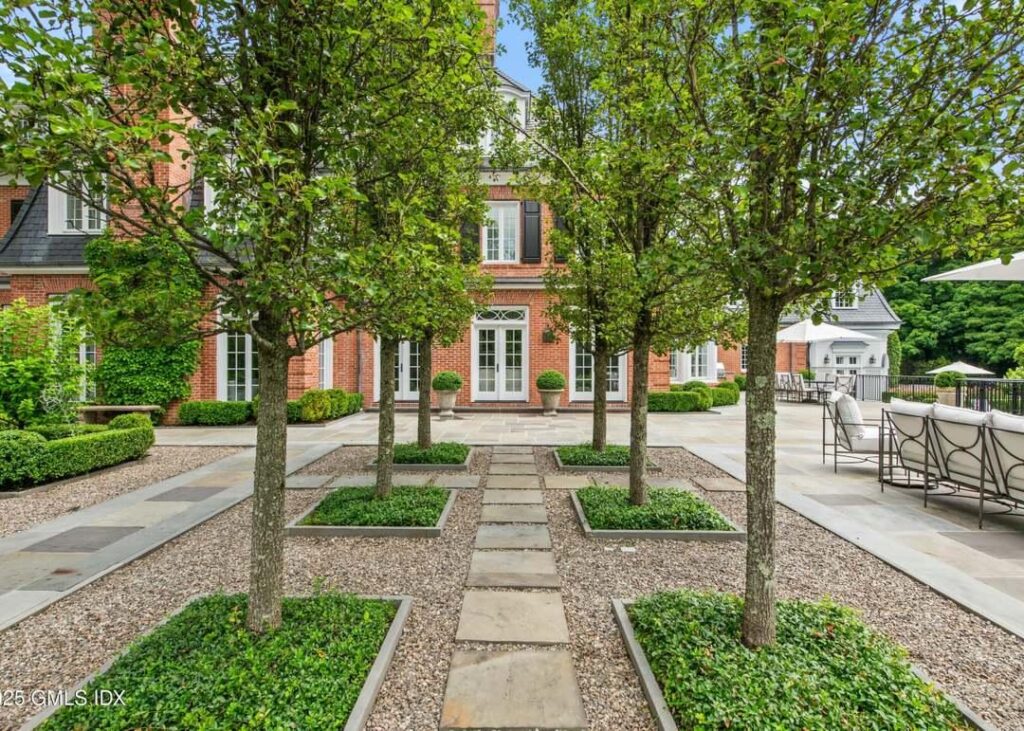
People naturally seem to enjoy patterns. We are drawn to repetition, symmetry, and things that feel balanced. In landscape design, these elements help create a sense of structure and make spaces feel intentional. Repeating plants, using consistent spacing, and creating defined edges can make a landscape feel clean and organized. Structured planting also works well with architecture, helping tie buildings, pathways, and outdoor spaces together. There is also something satisfying about a well-organized landscape where everything feels like it has its place.
Embracing Natural Disorder
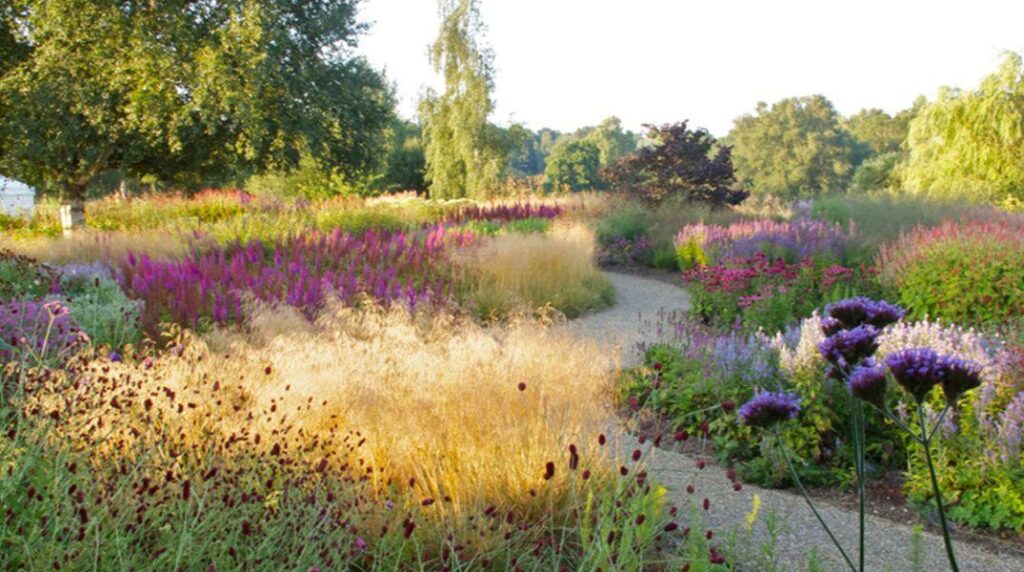
Naturalistic planting takes a different approach. Instead of trying to control every detail, it allows plants to grow in a more relaxed and natural way. Plants are grouped more loosely, heights and textures vary, and the overall look is less predictable. In nature, plants don’t grow in perfectly spaced rows. They spread, compete, and find their own space depending on the conditions around them. This style can also be beneficial for wildlife, providing more variety in food sources and habitat. One of the best things about naturalistic planting is that it changes throughout the seasons. It can feel different every time you see it. There is something appealing about a landscape that doesn’t look too perfect or overly planned.
Maybe the beauty of naturalistic planting comes from the fact that we don’t have complete control over it.
The Problem with Extremes
Like most things, there are downsides to taking either approach too far. A landscape that is too controlled can start to feel stiff, overly formal, or even a little sterile. When everything is perfectly spaced, clipped, and maintained, some of the life and character can get lost. On the other hand, planting without much structure or thought can quickly become messy and difficult to manage. Plants can compete with each other, spread too far, or create a confusing mix of colors and textures.
It’s also worth considering that these approaches often depend on the type of project. A formal courtyard or corporate entrance might benefit from a more structured and organized planting scheme, while a large residential project or natural open space might lend itself better to a looser, more naturalistic approach. The setting, architecture, intended use, and overall feel of a space all play a role in determining which direction makes the most sense. Not every project calls for the same approach, and that’s part of what makes landscape design interesting.
There is a difference between something that looks natural and something that has simply been left to grow. A natural-looking landscape still needs a lot of thought and planning behind it. Just because something looks effortless doesn’t mean it was.
Finding Balance: Structured Naturalism
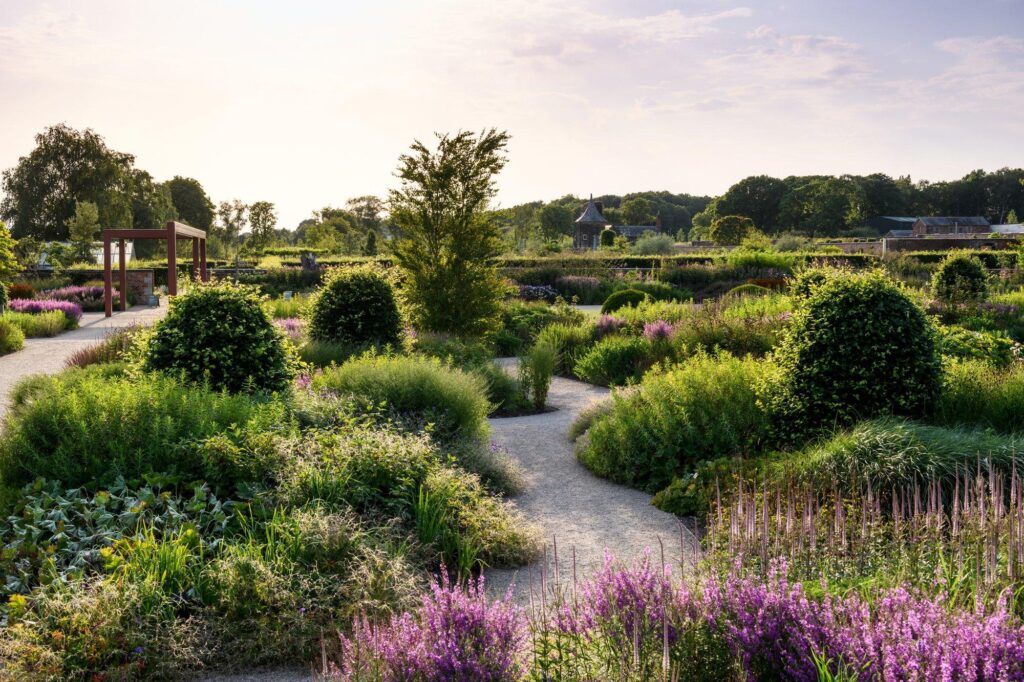
Maybe the best approach is somewhere in the middle. We don’t necessarily need to choose between a perfectly organized garden and a completely natural one. We can create a strong structure through pathways, walls, and defined spaces while allowing the planting itself to be a little more relaxed. Plants can still be repeated throughout a space, but arranged in loose groups rather than perfectly straight rows. A limited selection of plants can create consistency while different heights, textures, and colors keep things interesting. The idea is to have enough structure to make the space feel intentional without making it feel overly controlled.
Some examples:
- Repeating ornamental grasses in loose groups rather than straight lines.
- Using clean, geometric pathways surrounded by more natural planting.
- Allowing plants to spill over the edges of planting beds.
- Mixing different heights and textures while keeping a consistent plant palette.
- Using repetition to create a sense of rhythm without making everything look identical.
Good design isn’t necessarily about choosing order or disorder. It’s about knowing when to use each.
Designing for Change: A Landscape Is Never Finished
Unlike a building, a landscape is never really finished. Plants grow, spread, compete, and eventually die. Things are constantly changing. A planting scheme might look perfect when it is first installed, but it will inevitably look different a few years later. We often design with a specific end result in mind, but how much control can we really expect to have over something that is constantly growing and changing? Maybe instead of trying to control every detail, we should focus on setting things up for success and allowing the landscape to develop naturally. Maintenance doesn’t always have to mean keeping everything exactly as it was. Sometimes it means guiding the landscape in the right direction and knowing what to leave alone. There is something quite beautiful about the idea that we create the starting point, but nature helps shape what comes next.
Finding a Balance
At the end of the day, landscape design is about finding a balance between what we want to create and what nature wants to do. Structure gives a space a sense of order and purpose, while natural variation brings life, movement, and character. Neither approach is necessarily better than the other. They just create different experiences. Rather than trying to control everything or letting nature take over completely, perhaps the best approach is to work somewhere in between. We can create the framework, make the initial decisions, and then allow nature to have a little say in how things develop.
Perhaps the beauty of landscape design isn’t about having complete control over nature but knowing when to step in and when to step back. We can create the framework and set things in motion, but ultimately, nature has a way of making things its own. Maybe the most interesting landscapes are those that find a balance between the order we create and the natural patterns we learn to embrace.
Written by: Maylee Thompson