Plants for Dry Shade
With drought and water conservation on everybody’s mind, incorporating water-saving principles into our landscapes is crucial. These principles include grouping plants of like water needs together, reducing or eliminating lawn, using native and/or low-water use plants, and converting irrigation from overhead spray to a drip system where possible. Many of the plants we see in low-water plant lists are sun-loving. But what about saving water in the shade? It is still possible to use water-saving principles in shade if plants are chosen carefully. The following is a list of plants that will perform well in dry shade. Keep in mind that they will still need establishment irrigation and supplemental irrigation during times of extreme drought and heat.
Trees
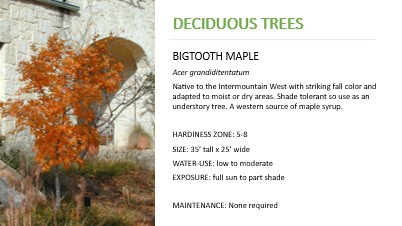
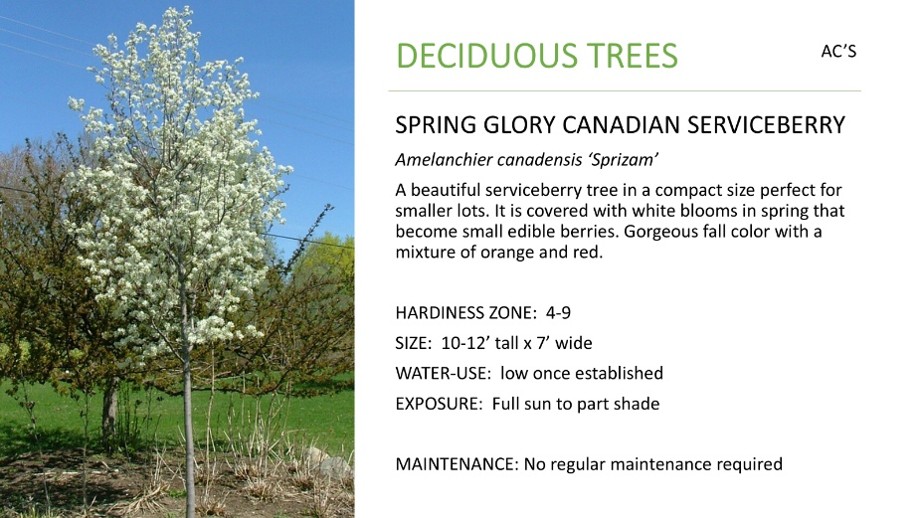
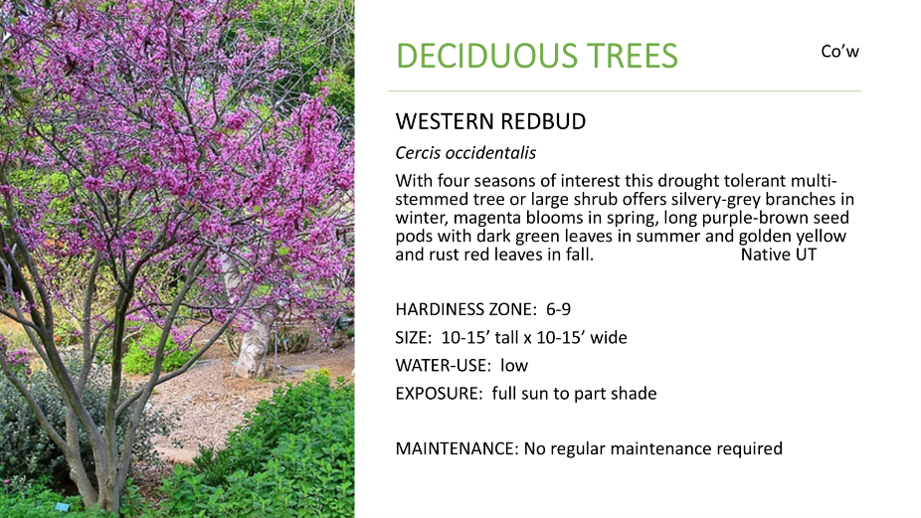
Trees that perform well in dry shade conditions are going to be those that exist as understory trees in native settings, such as our Bigtooth Maples, Western Redbuds, and Serviceberries.
Shrubs
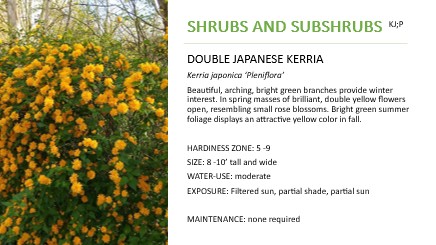
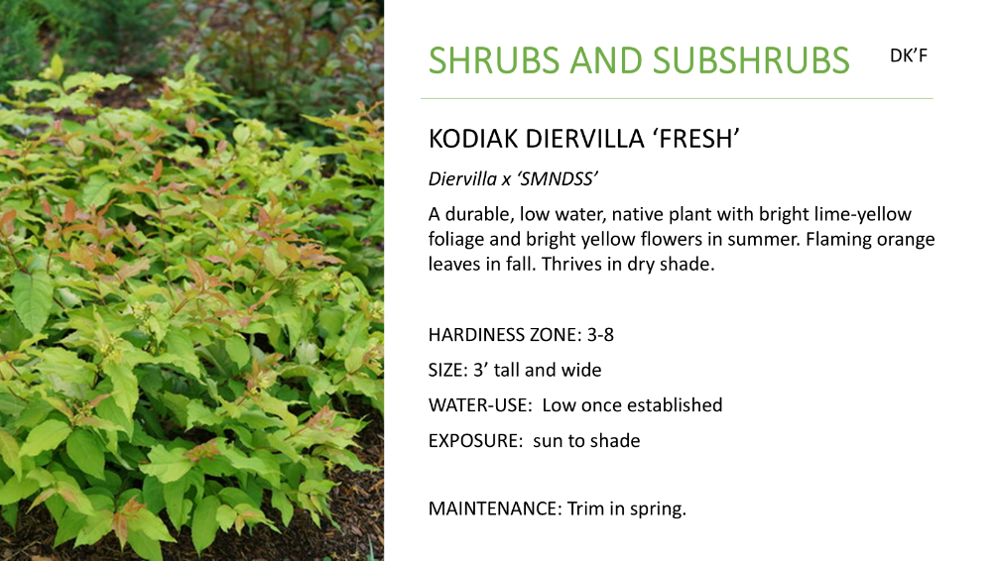
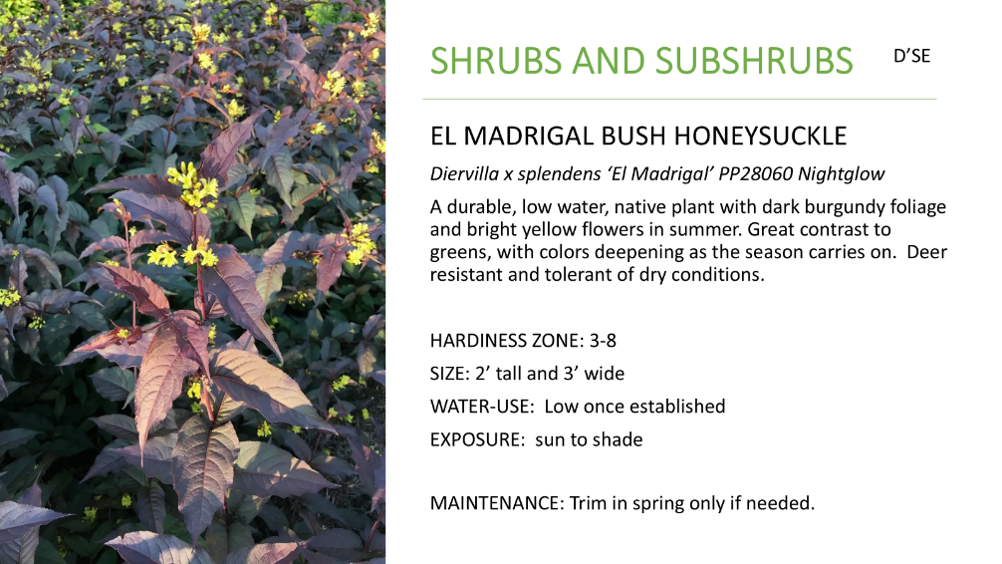
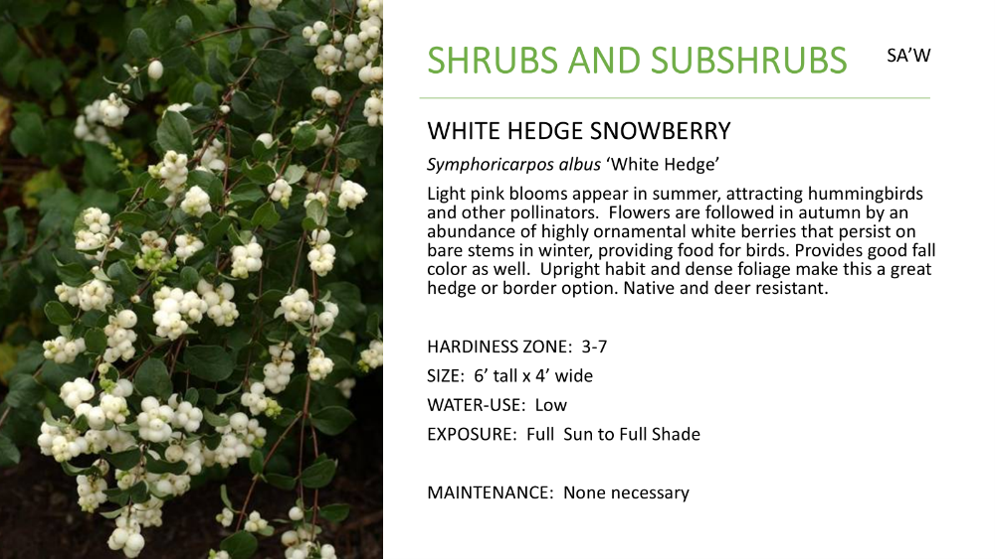
Diervilla, Kerria, and Snowberry are native plants that are tolerant of dry shade conditions. Cultivated varieties of these are available in the nursery trade. Keep in mind that blooming shrubs will generally have less flowers/fruits in a shady location than they will in a sunny spot, and growth may be slower. As with trees, establishment watering will be needed to get the plants off to a good start.
Grasses
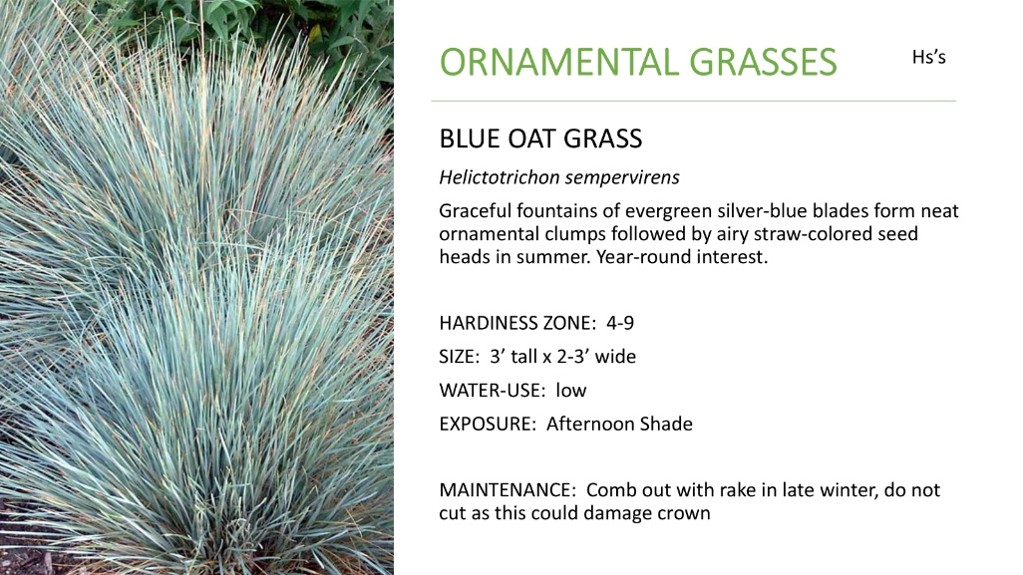
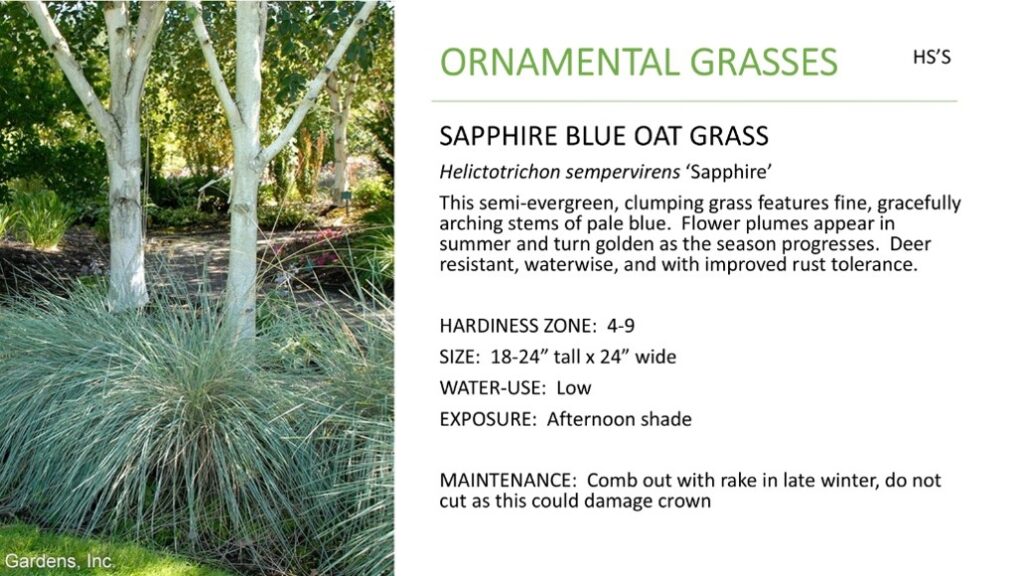
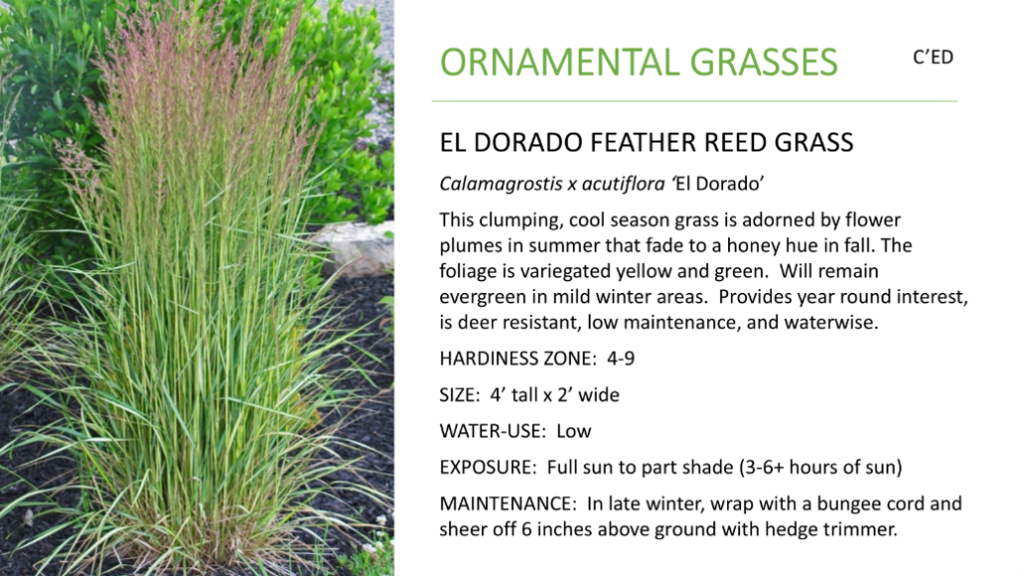
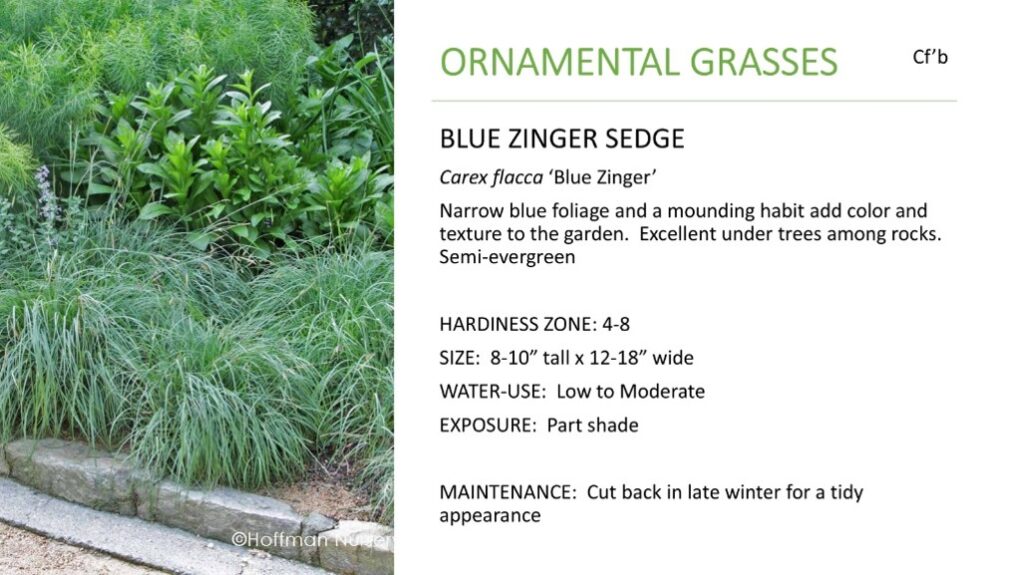
Grasses add movement and texture to planting areas. Blue Oat Grass is a beautiful grass and, just like the name implies, sports blue tones. While it does like a few hours of morning sun, it needs to be protected from harsh afternoon sunlight, which will burn its leaves. El Dorado Feather Reed Grass will perform well in dry shade, given that it receives at least 3 hours of sun per day. Blue Zinger Sedge is an excellent option for use under trees.
Perennials
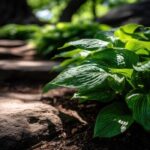
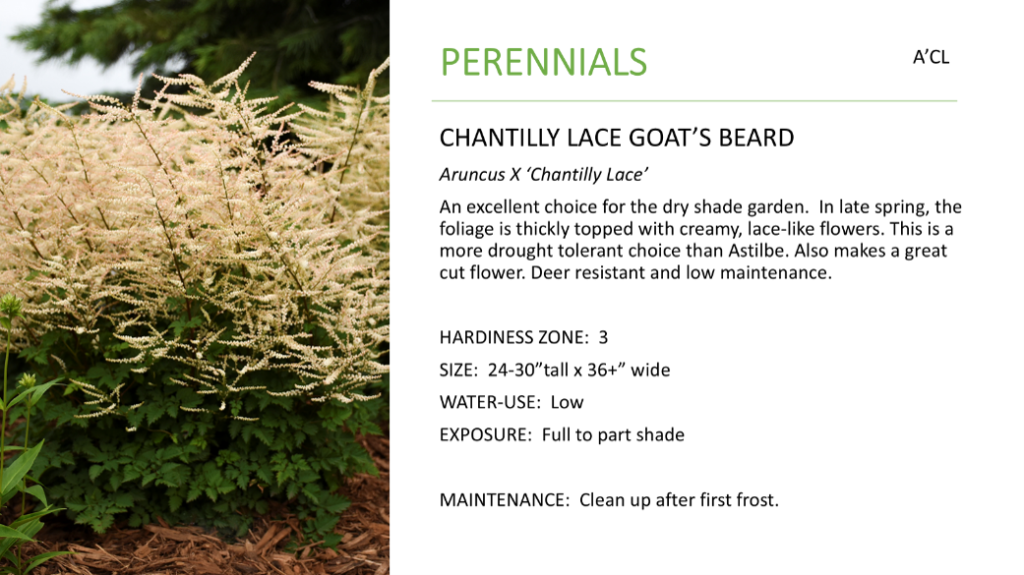
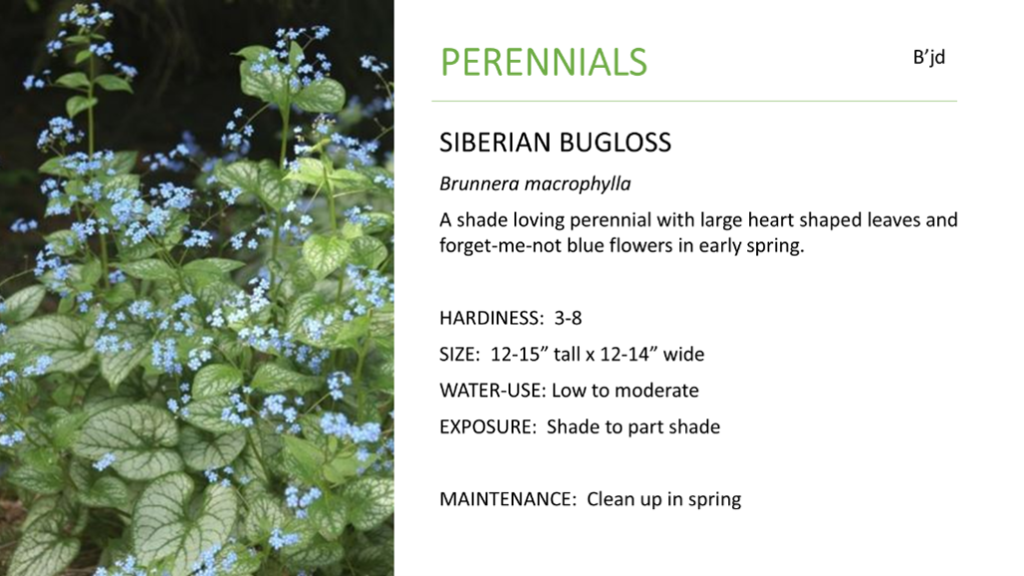
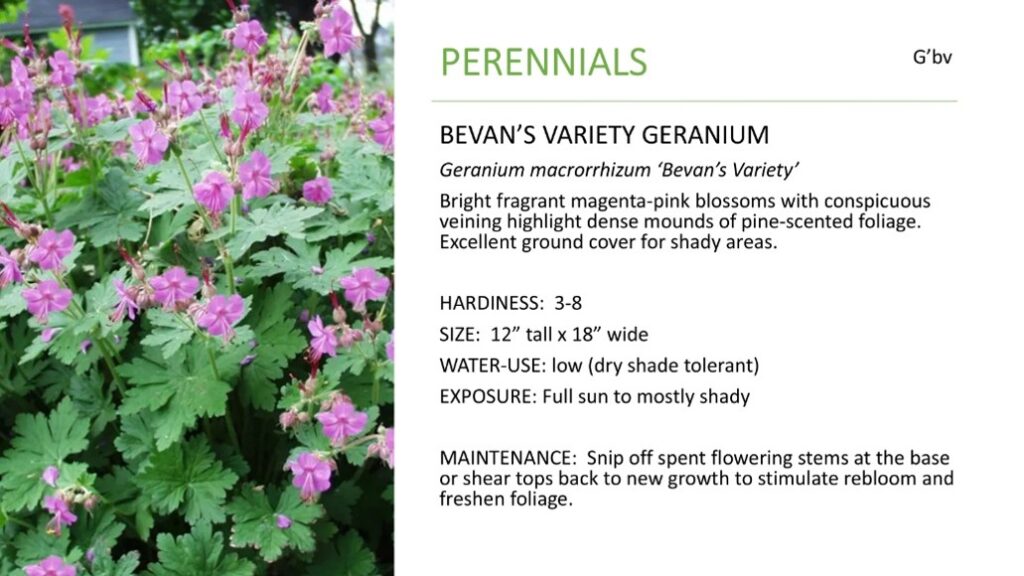
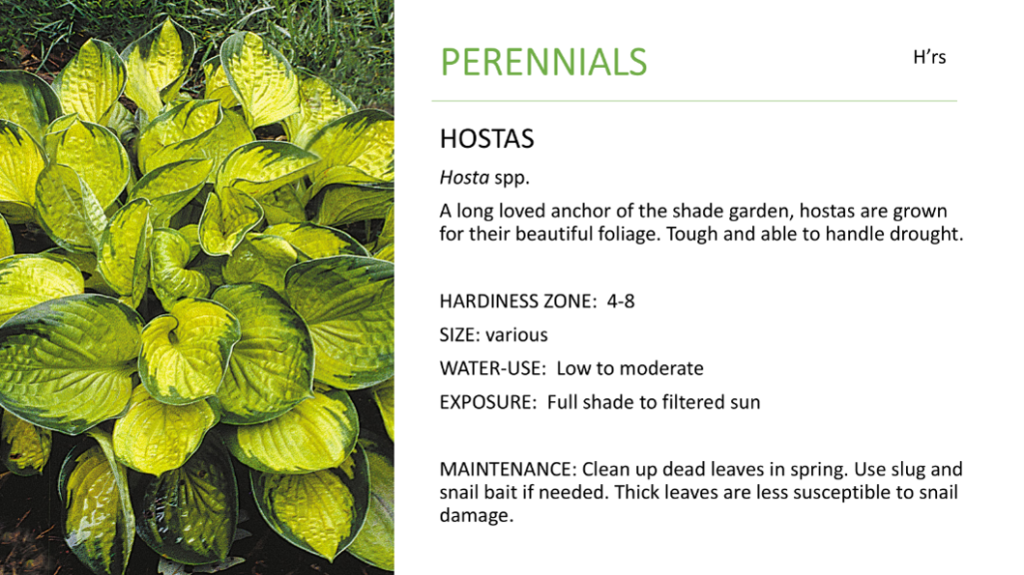
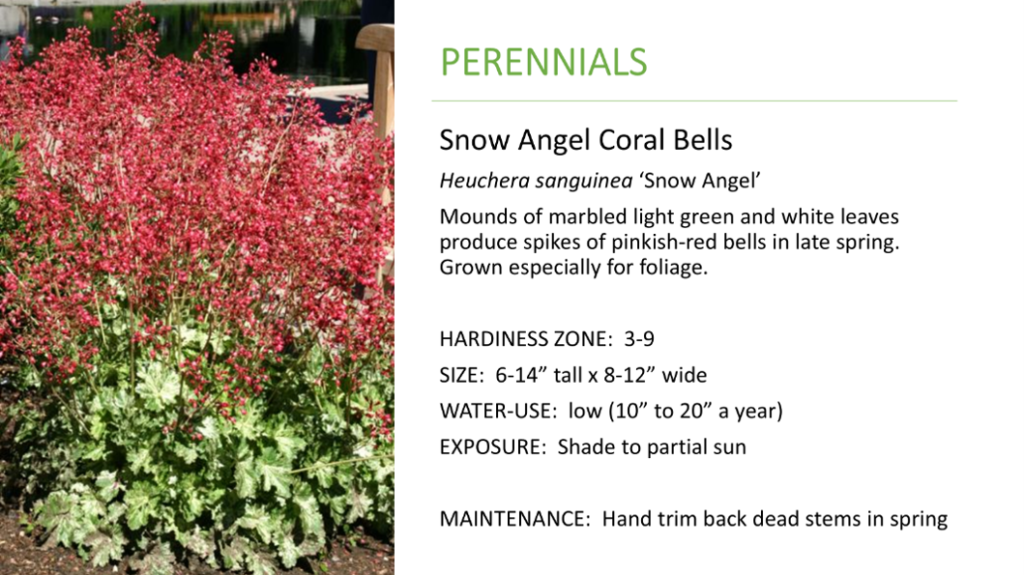
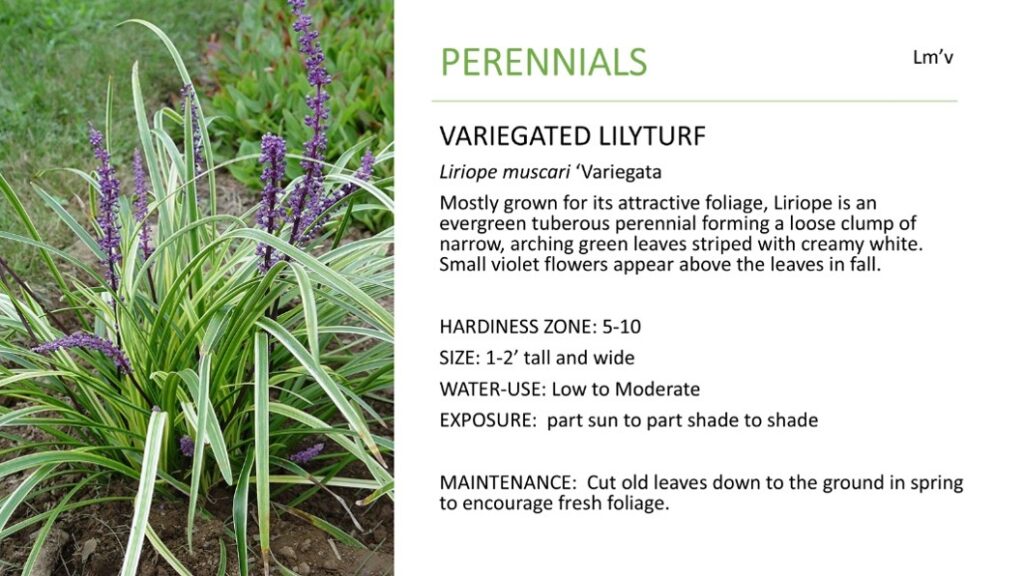
Perennials bring pops of color with their blooms and in some cases, their multi-colored foliage. For dry shade, look for Goat’s Beard, Hosta, Brunnera, Liriope, Heuchera, and Geranium. Heuchera varieties offer a rainbow of foliage colors from red and burnt orange to purple and even near black. The blooms are a bonus. Brunnera’s foliage varies among varieties, but generally sports large, heart-shaped leaves with silvery accents. Baby blue flowers float and dance above the foliage. I enjoy collecting and growing different varieties of brunnera for my dry shade areas. Hostas are widely available and come in a huge variety of sizes and leaf colors. They will require supplemental water in harsh conditions, but generally are able to handle dry spells once established. Goat’s Beard is an underrated champion of the dry shade garden and should be used more. Hardy Geraniums are able to fill in spaces well and fully cover the ground, aiding in weed suppression. Liriope offers grass-like foliage but with the added benefit of purple flowers in late summer and early autumn.
Groundcovers
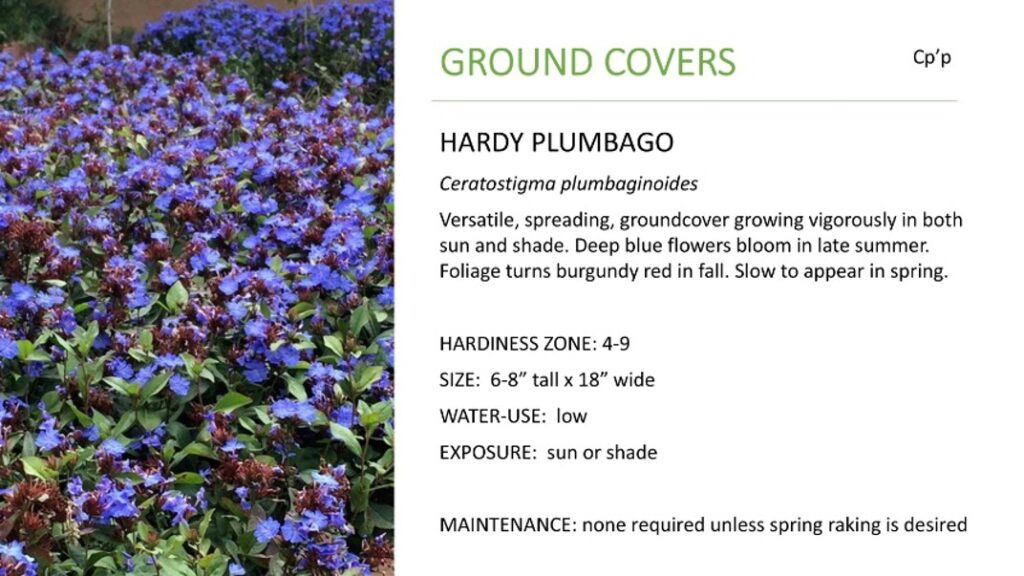
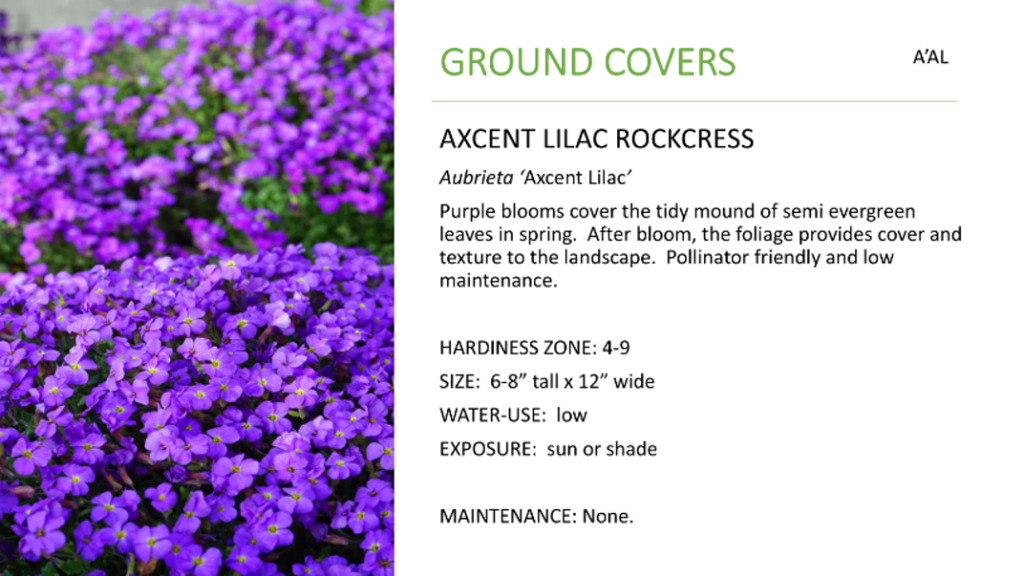
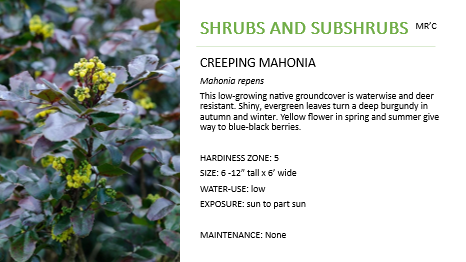
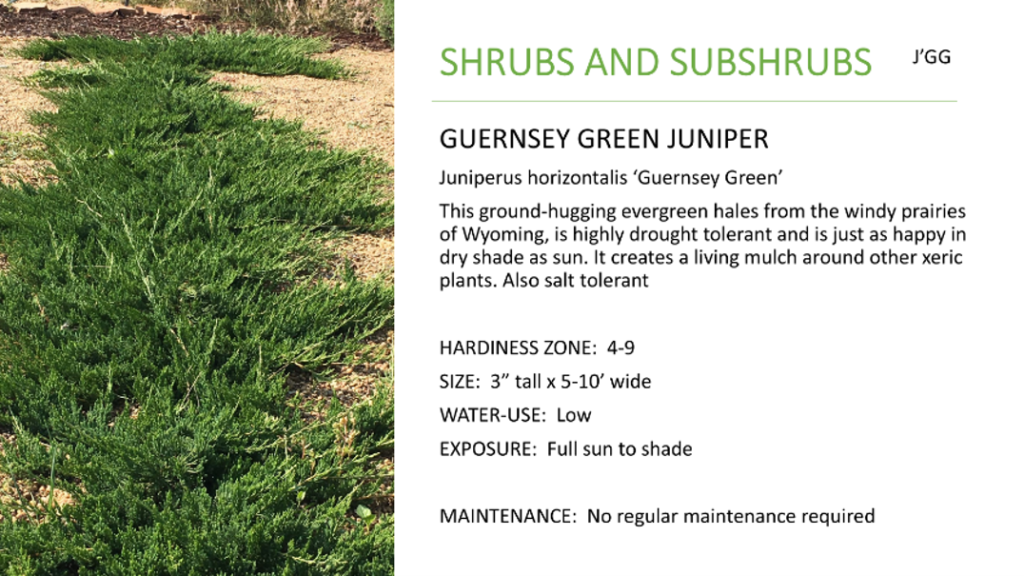
Groundcovers are a great tool for tough areas that need to be filled in. They can cover slopes and cascade over boulders, grow under trees, and line pathways. For dry shade, look for Hardy Plumbago, Rockcress, Mahonia, and certain varieties of spreading Juniper, such as ‘Guernsey Green’.
Hardy Plumbago is interesting through all the seasons and requires zero maintenance. Just plant it and watch it go. Rockcress is excellent for planting among boulders and will give a nice big pop of color in the spring. Mahonia is excellent for massing and filling large areas. Groundcover Junipers are stars for hardiness and being maintenance free, but be sure to pick a variety that is tolerant of shade, as not all of them are.
Conclusion
Bringing water-conscious principles to shady spaces is possible through careful plant selection. Put these plants in shady to partially shady spots in your yard, and they will bring you years of seasonal interest, color, and beauty. You’ll have it made in the shade!
Written By: Abby Roberts