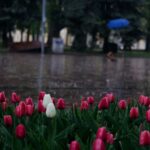
Covering bare ground benefits the landscape in a variety of ways. It helps to maintain soil moisture, prevent erosion, suppress weeds, and create a finished look. However, the decision of which mulch to use can be a bit more complicated.
Let’s look at the following and discuss each one:
- Inorganic mulch—Rock
- Organic mulch—Bark, Compost, Soil Pep
- Plants
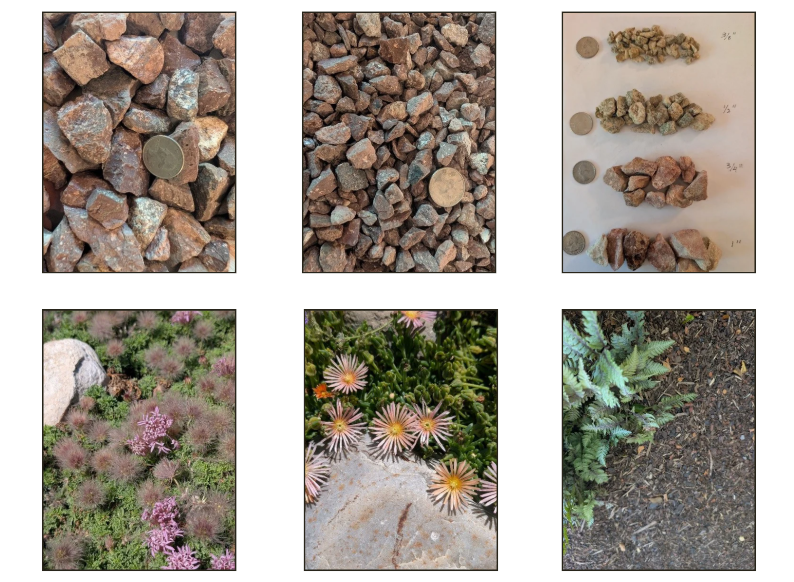
Inorganic Mulch or Rock is used extensively in Utah, often to the point of creating only a sea of rock with a few plants sprinkled in.
There are many varieties and styles of rock available. Here is what we have found valuable:
Rock holds heat on the surface. Young plants can struggle until their roots work their way down into the cooler soil below. Don’t put rock directly next to the plants, and make sure water is adequate for establishment.
The size and type of rock matters. Using crushed or fractured rock allows the rock to “fit” together, reducing weed growth. Round rock allows weed seeds to settle and germinate.
Small rock is more effective than larger rock. Use 1/2-inch or 3/4-inch rock for best coverage and weed suppression. Accent with larger size rock or boulders.
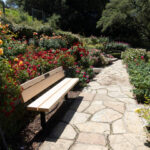
A dry stream bed is a nice look when a lot of rock is required. Breaking up a monotonous field of rock with various sizes and additional plants will enhance the landscape.
Organic Mulch—Bark, Compost, Soil Pep puts nutrients back into the soil. Bark takes longer to decompose, and shredded bark often stays in place better on windy days.
Compost can be used as a top dressing and usually has some bark mixed in to lighten the mix.
Soil Pep quickly decomposes and is great when putting in a ground cover where you will not need to replenish it after the ground cover has spread. It will easily blow away.
All organic mulches need to be replaced about every 2 years.
Their greatest benefits are the amount of organic matter that gets incorporated into the soil, increasing microbe activity, soil aeration and aggregation, and moisture retention. It is also a great weed suppressor.
Plants
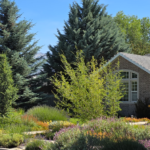
We may not think of plants as a ground cover or mulch. However, when plants are placed together, they cover the ground, shading out weeds and keeping the soil cool.
Spreading ground covers like Ajuga or Sweet Woodruff for shade, Partridge Feather or Moroccan Pincushion Flower for sun, are just a couple great options.
Low-growing shrubs like Guernsey Green Juniper or Manzanita are evergreen and can cover a large area.
Don’t be afraid to plant more shrubs, perennials, and grasses in your bed areas. They can reduce the workload of weeding and be a lovely addition to the garden.
Final Thoughts
A mulch covering of 3–4 inches are best for weed suppression.
Please see the blog post on weed barrier fabric, as we do not recommend using it.
Choose what is best for you and your landscape. Rocks and boulders are a beautiful addition in the Rocky Mountain West, but a sea of rock is not a landscape.
Written By: Sandy Vernon