Every time heavy rain hits, your yard becomes a battleground against water. Whether it’s a massive puddle submerging your lawn or a small stream carving a path down your driveway, poor drainage is more than just an eyesore, it can threaten your home’s foundation.
While conventional fixes can mean expensive underground piping, green infrastructure offers a smarter, natural way back to a dry yard.
Introducing rain gardens and bioswales: two beautiful, eco-friendly landscape solutions designed to catch and control stormwater, but which one does your yard need? Let’s break down the key differences so you can pick the right fix for your landscape.
What’s the Difference?
| Category | Rain Garden | Bioswale |
|---|---|---|
| Primary Function | Infiltration: Captures, pools, and slowly soaks up standing water into native soil. | Conveyance & Filtration: Slows, channels, and cleans fast-moving water as it flows elsewhere. |
| Shape & Form | Level, shallow, bowl-shaped depression or basin. | Long, linear, gently sloped ditch or trench with check dams. |
| Maintenance | Low-to-Moderate: Standard Garden upkeep—weed spring/summer, replenish mulch annually, and prune native plants. | Moderate-to-High: Regular clearing of debris, pipe flushing, and stabilizing channel slopes to prevent bank erosion. |
| Best Use | Residential yards, capturing single downspouts, flat areas, or patio runoff. | Property lines, long driveways, steep slopes, roadsides, or parking lot edges. |
| Water Volume | Handles low-to-moderate, runoff volumes. | Handles high-volume, high-velocity stormwater surges. |
What Does Your Property Need?
To determine what your property needs, start by observing your yard during a heavy downpour.
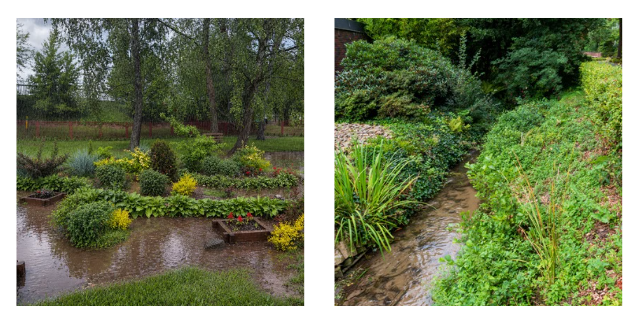
If you are dealing with puddling on flat grounds or in a low spot on your lawn, a rain garden is the ideal, cost-effective choice to capture and absorb that still water.
On the other hand, if stormwater is actively rushing down a slope, eroding your soil, or pooling along a long driveway or property line, you need a bioswale to safely and effectively redirect, filter, and control that high-velocity flow.
Ultimately, selecting the right system comes down to whether your landscape needs a stationary sponge to soak up water or a controlled channel to move it away.
Written By: Kenton Ainsworth