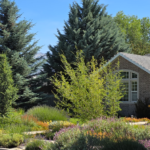
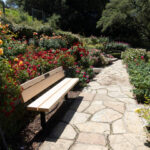
Xeriscape—a largely misunderstood word—was originally coined by Denver Water to describe landscapes where native and adapted plants use minimal amounts of water.It didn’t take long before people heard the word as “zeroscape,” not understanding that Xeric meant very dry conditions with little water, and that “zeroscape” was never a word.
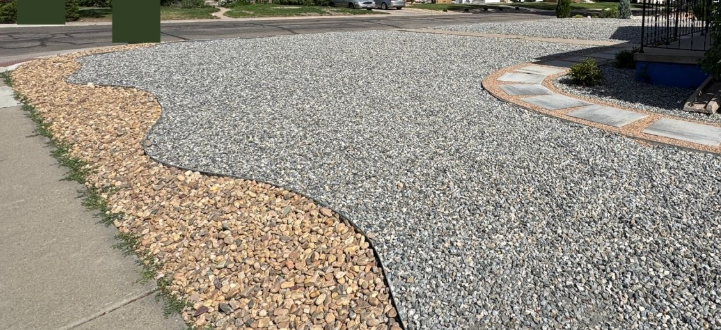
With this misunderstanding, people began to interpret “xeriscape” as “zeroscape”—a landscape with no plants and yards filled primarily with rock. The appeal was obvious: zero plants and, supposedly, zero maintenance. Plants are what make a landscape a landscape, so a “zeroscape” isn’t really a landscape at all. And it certainly isn’t a solution for low maintenance. It is also not a solution to no maintenance. For the first year or so landscape fabric under rock seems easy, but trouble is only deferred for a year or two. Plants help suppress weeds and they cool the landscape. Soon weeds come in on top of the landscape fabric, wedged between the rocks, and work increases exponentially as the seasons go by and the weeds increase. Mother Nature fills empty spaces.
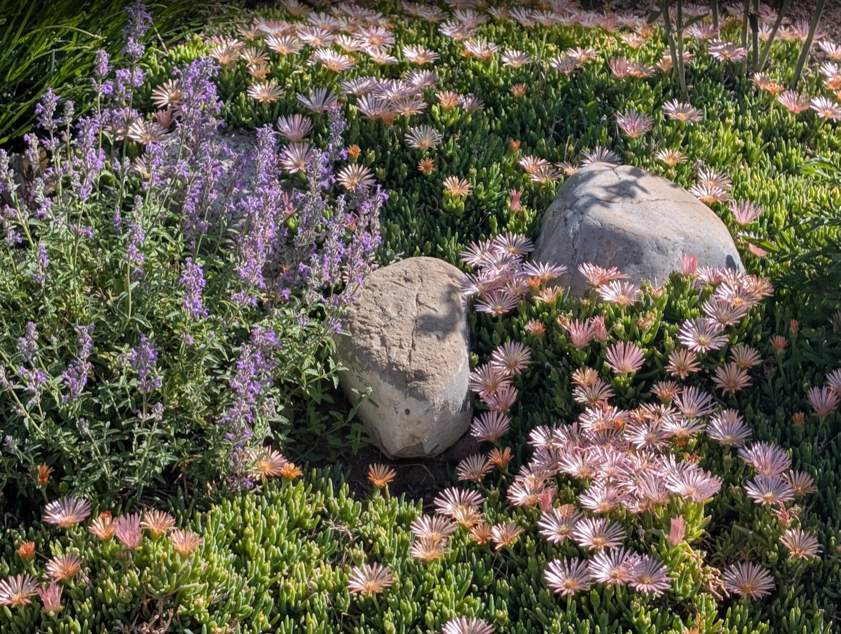
As we work to find a better word that people can relate to, phrases like drought tolerant, water-wise, low water are regularly used. Although these terms are somewhat ambiguous, most people within a given region understand what they mean. But drought tolerant in the southeast where they receive 48” of rain annually means something different than it does to people who live in a desert where they get 10” of rain annually. Different plants can tolerate different lengths and degrees of drought, which might last for a week or all summer depending on where you live.
Utah has found the word “Localscapes,” (https://localscapes.jvwcd.gov/) coined by Jordan Valley Water Conservancy District, to represent a smarter landscape style designed for where Utahns live.
Whichever word you choose, know that best management practices include choosing the right plant for the right place, grouping together or hydrozoning plants that have the same water requirements, monitoring irrigation (we are drowning our plants) and knowing how to properly maintain the plants and lawn in the landscape.
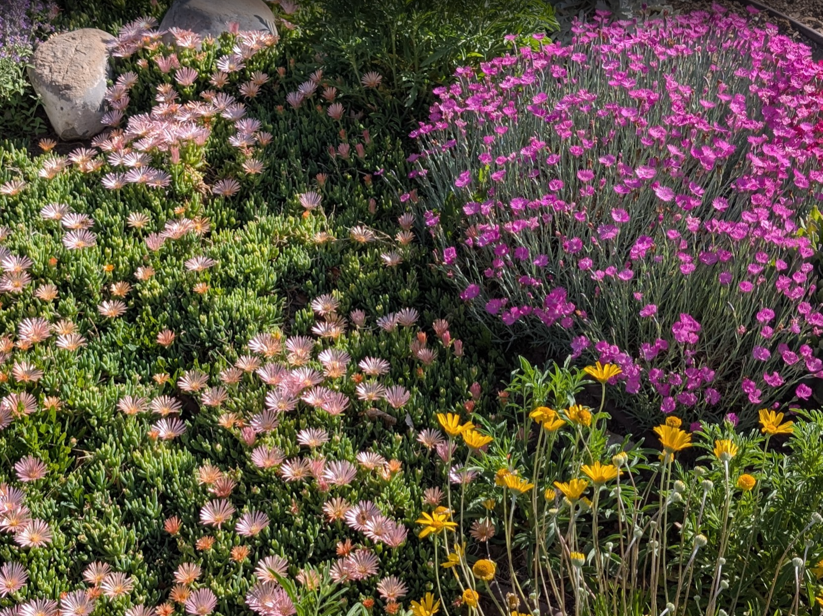
Understanding the meaning of these words helps to convey your intent to the landscape architect. Don’t be afraid of more plants, they will save you time and money in the long run and beautify your yard. So, think less water than you currently use, be water-wise. Choose plants with similar water requirements. Plan on irrigation, as the transition from natural systems to our built environments is difficult without irrigation. Most of all, enjoy a beautiful, water-wise yard that grows and changes with each passing year. And don’t mind if we ask you to tell us your definition of Xeriscape so we are both on the same page.
Written by: Sandy Vernon